Our Work
art Therapy Program
Inside the Art Therapy Sessions for Afghan Girls
There is a moment, near the start of every session, when a blank page still holds every possibility. For a few seconds, no one speaks. Then a color is chosen, a first line is drawn, and something that had no name begins to take shape.
about
The Art Therapy Sessions are a space where Afghan girls turn to color, paper, thread, and image instead of words — not because words fail them, but because some feelings need a different language to be understood. Where the Book Club opens a page and asks, “What do you think?”, Art Therapy opens a blank canvas and asks something quieter: “What do you feel, and how does it want to look?”
For many of the girls who join, this is the first time anyone has asked that question without expecting a correct answer. There are no right brushstrokes. A jagged line can mean as much as a smooth one. A page left mostly empty can say as much as one covered edge to edge. The only rule is honesty with the material in front of you.
“Some things are easier to paint than to say out loud.”
Our mission
To give Afghan girls a safe, creative outlet for expressing thoughts and emotions that confinement and repression have tried to silence — using art, color, and craft as a language of their own, and building confidence, resilience, and community along the way.
our vision
A future where every Afghan girl has a space to process what she carries — where creativity is treated not as a luxury, but as a form of care, and where healing through art stands alongside education as a form of empowerment.
inside a session
A single theme, offered gently
Each session builds around a single theme, offered gently rather than assigned. One week, the theme is color and feeling — girls choose the shade that matches their week and build outward from there, discovering that anger and calm can sit surprisingly close to one another on the same palette. Another week, the invitation is to build an inner landscape: a mountain, a river, a locked door, a window left open — whatever the inside of a difficult year actually looks like when it’s finally given a shape. Later, the theme turns to home — not the political home that has changed so much, but the personal one: a color from a childhood room, a texture from a mother’s scarf, a shape that recalls a doorway once walked through freely.
Paint is only one of the languages used. Some weeks bring collage and paper, hands tearing and layering instead of writing. Others bring photography, framing a single ordinary object — a cup, a window, a pair of hands — until it holds an entire emotion. Handicrafts turn thread and fabric into something quieter than speech but just as expressive. Across every medium, the through-line stays the same: creativity as a language for what confinement and repression have tried to silence.
None of this requires talent or training. No one is asked whether they can draw. They are only asked to show up, to try, and to let the process do what words sometimes cannot — soften a hard week, name an unspoken worry, or simply offer an hour that belongs entirely to the person holding the brush.
student artwork
In their own colors
student artist
Fatema
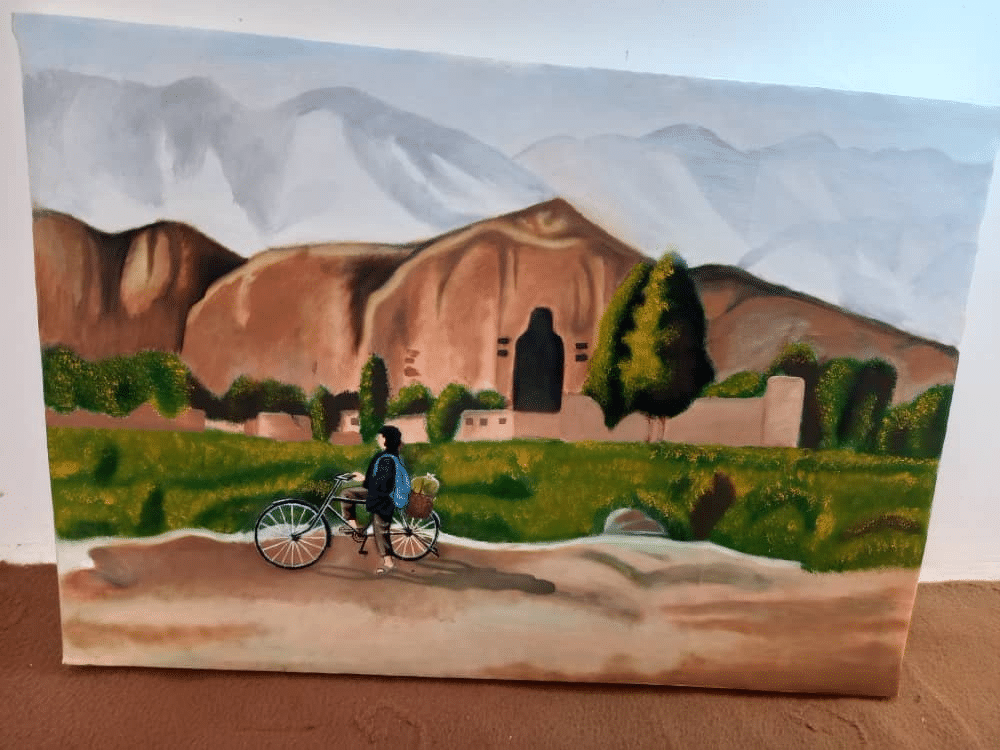
Pedaling beneath the silent cliffs of Bamyan, I carry my backpack not just for my own education, but as a quiet vow to live out the silenced dreams of the sister waiting behind.
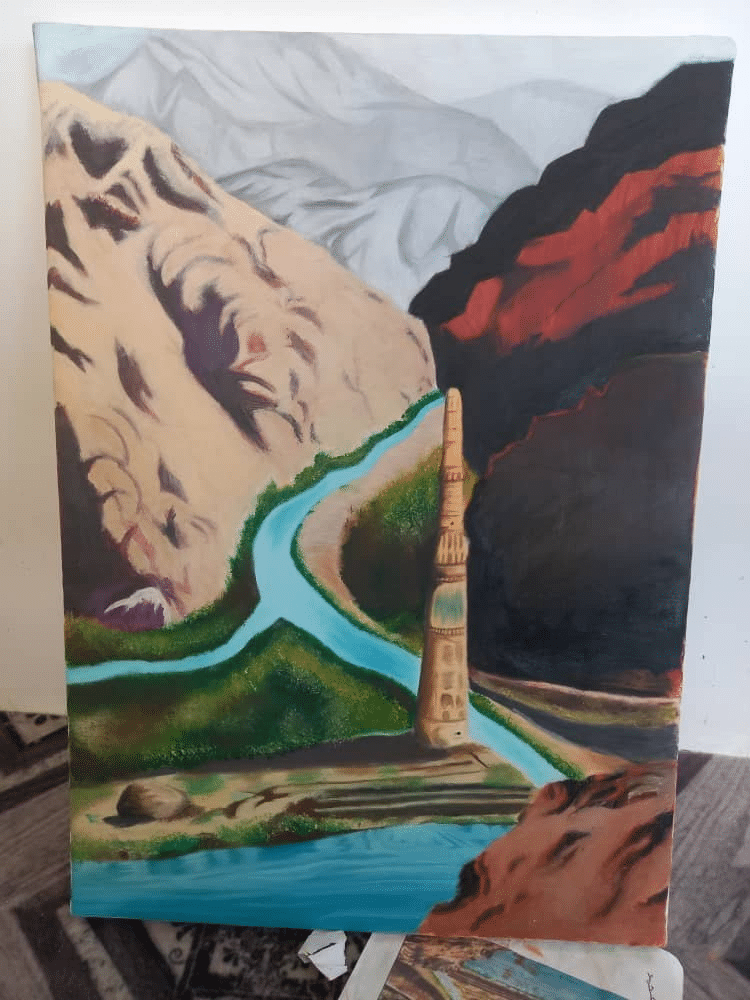
Carved into the timeless gorge of the Hari River, the solitary minaret stands as an enduring pillar of a resilient heritage, bridging the fractured cliffs like a quiet promise that some histories cannot be swept away by the winds of time.
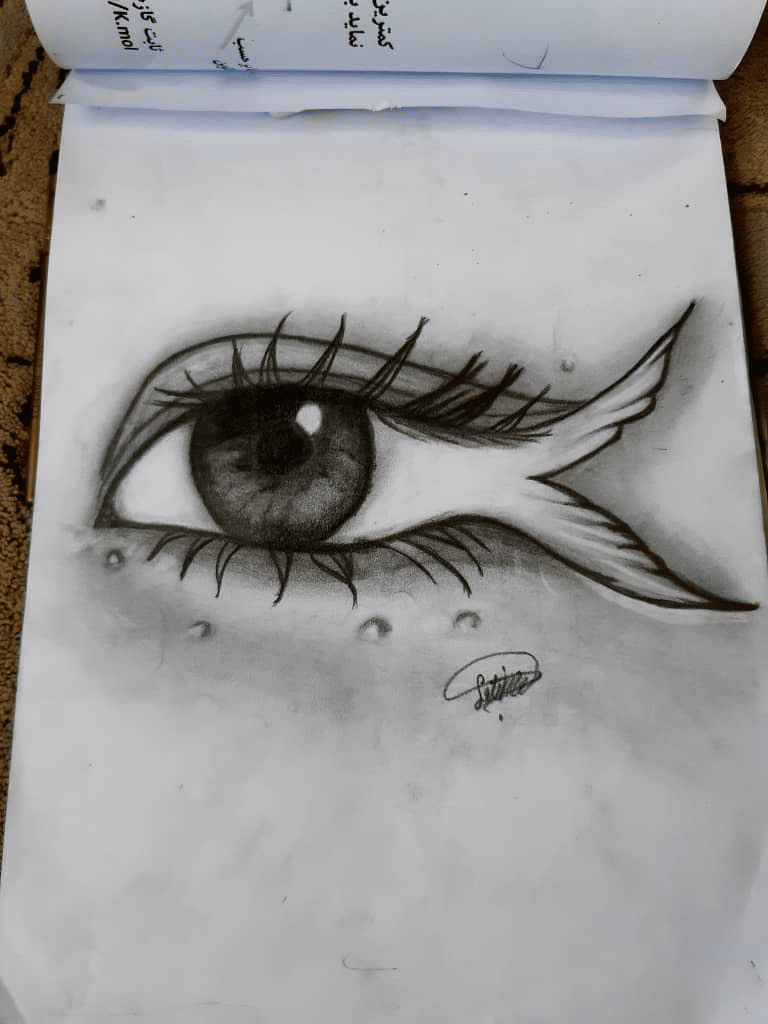
Behind lashes soaked in charcoal grief, an Afghan girl’s eye becomes a lonely sea where silenced dreams drift and swim against a current that tries to drown them.
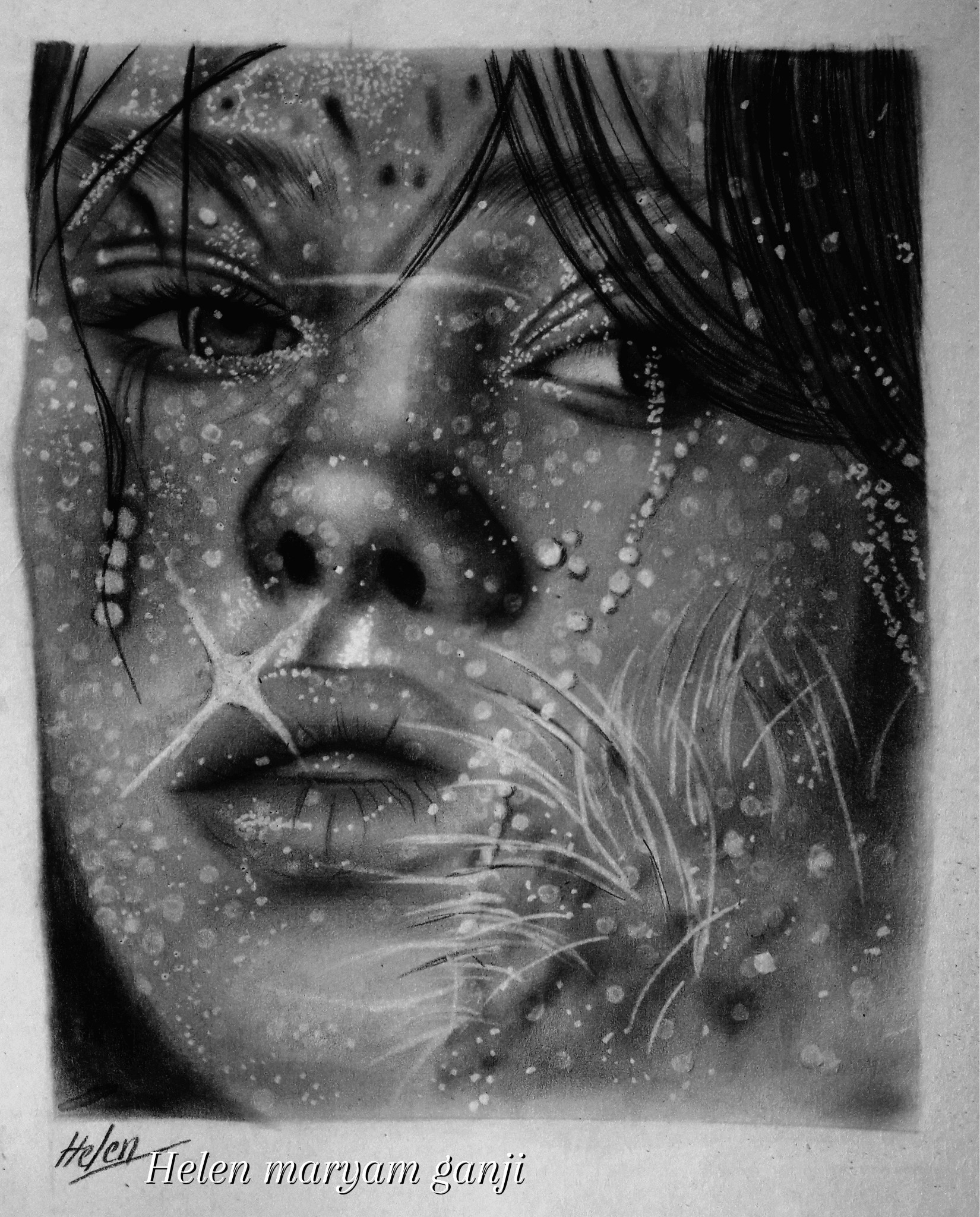
Student artist
Helen Ganji
I come from a place where paths were often closed,
but imagination and dreams always remained open to me.
Painting is not just an image I create, it is the way I survive a world that can be heavy and dark.
I grew up among shadows,
but I chose to paint the light.
In every color I place on paper
there is a trace of pain, a breath of hope, and the memory of a girl who learned that even when the world is heavy, beauty can still be found.
This artwork is not just a picture,
It is the quiet confession of my courage, a reminder that even in fear, I can continue; even when I break, I can rise again.
I am Helen, and this art is my second heartbeat.
student artist
Maryam
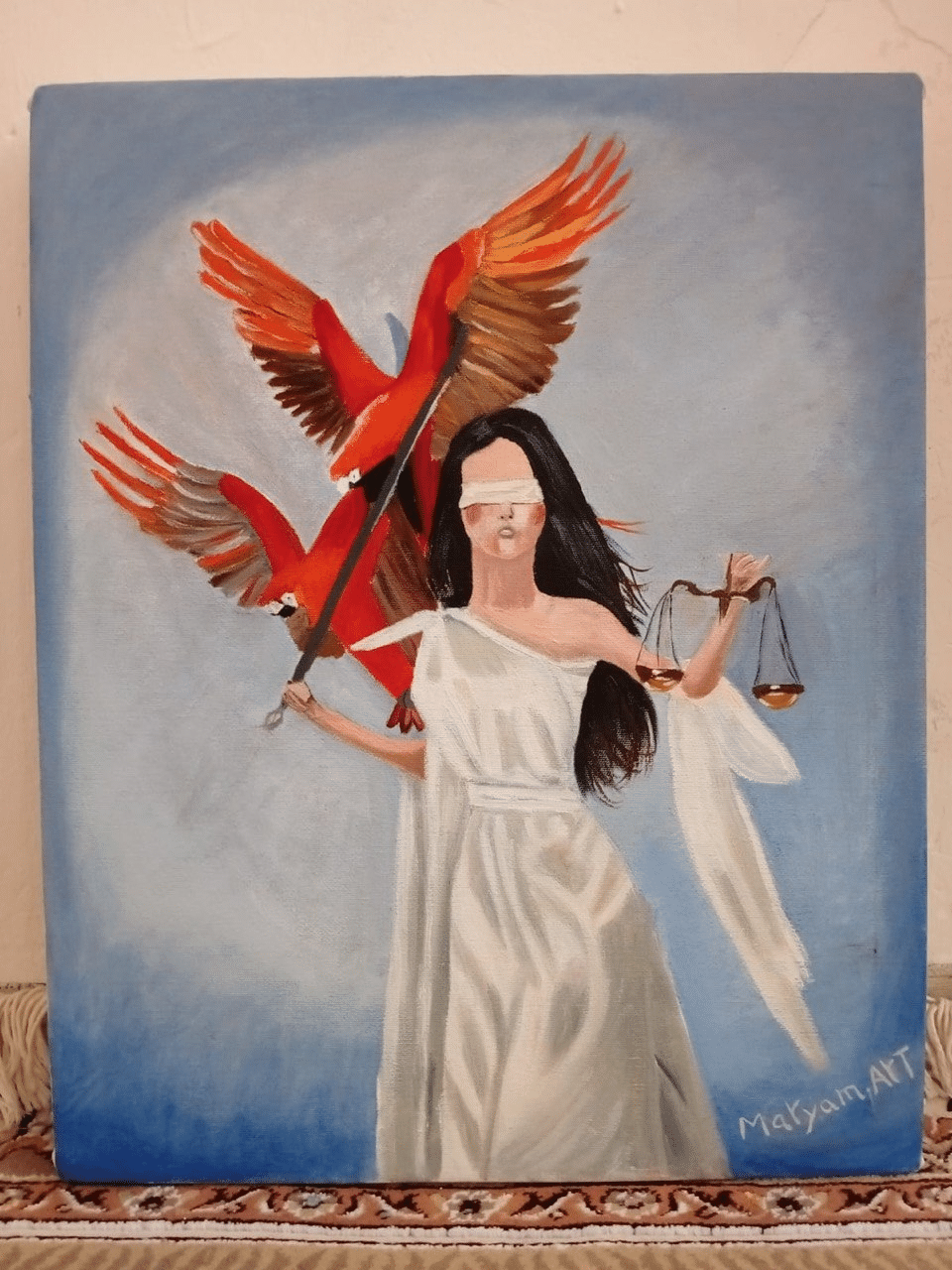
Where all rights are given away, she still carries the weight of her wings.
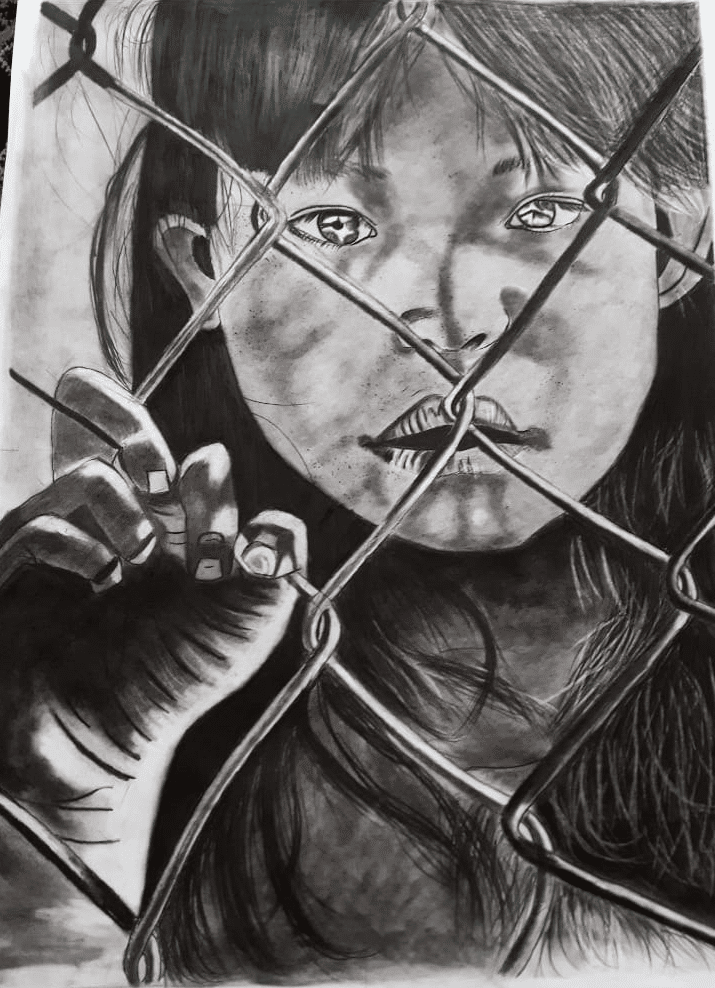
Behind the walls, forgot how to live life.
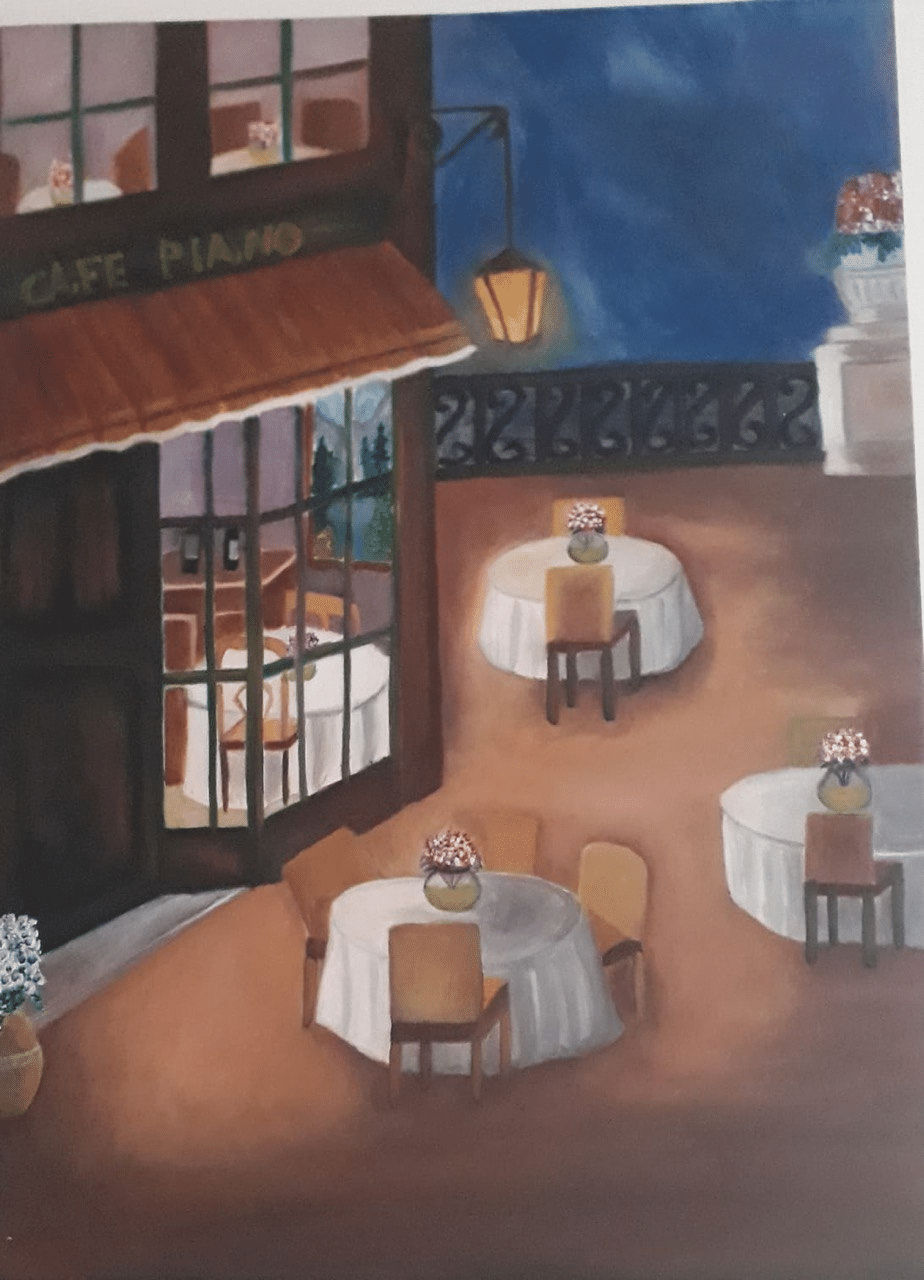
Empty tables and a lonely piano light paint a poignant picture of public life fading into shadow, yet the warm glow of the café remains a quiet, defiant refuge for hope.
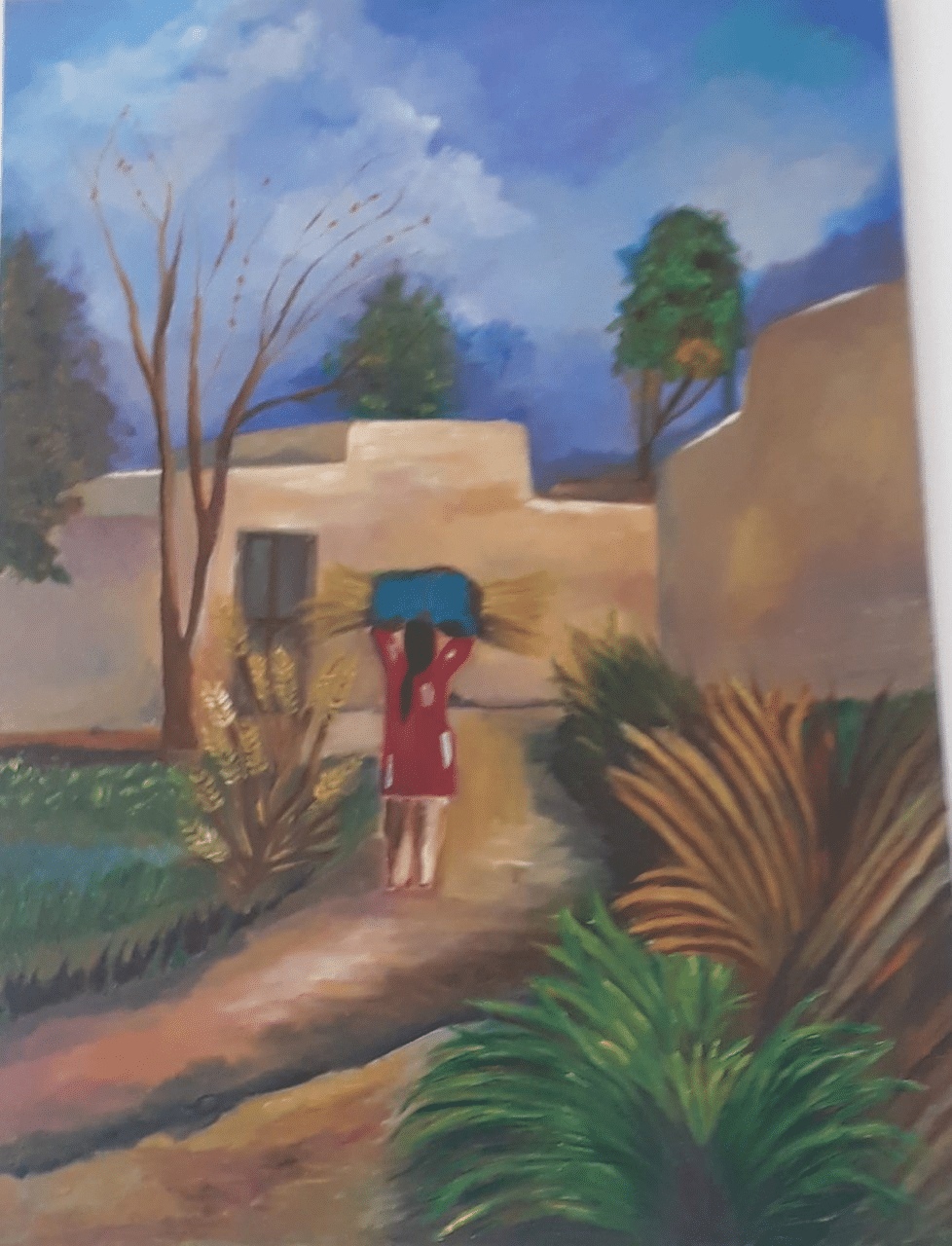
Under a heavy sky, she carries the burden of survival alone on a path forgotten by the world.
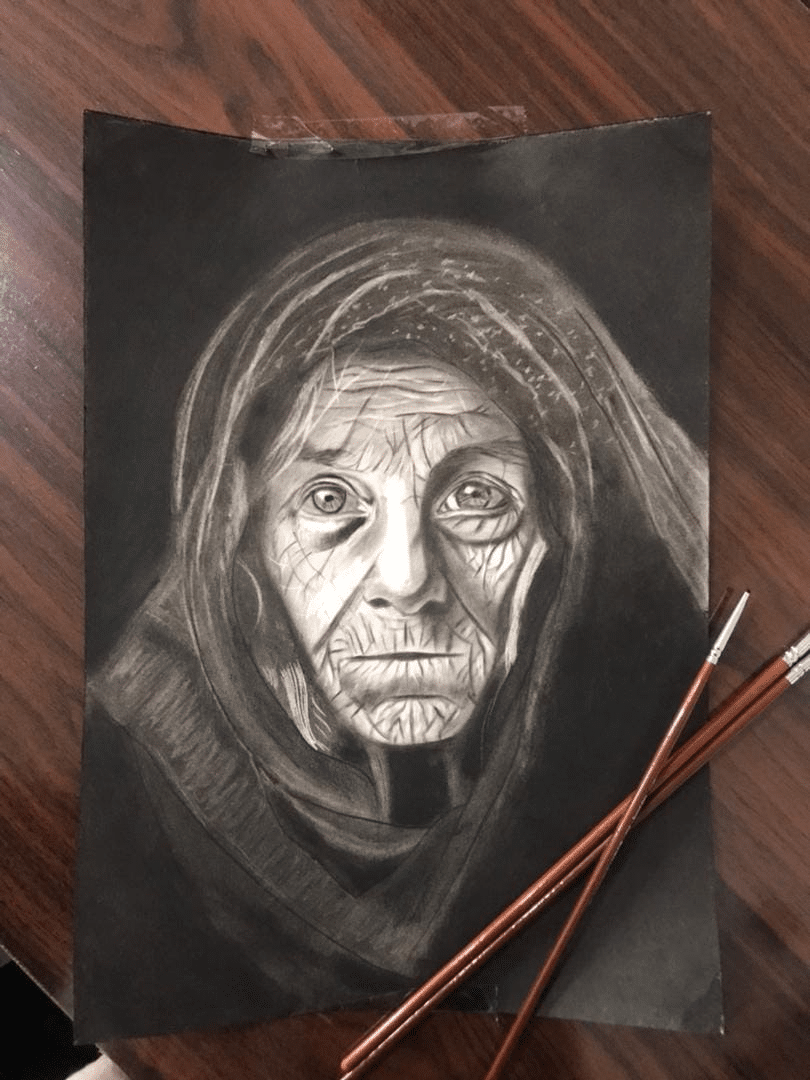
Every wrinkle on her face holds a lifetime of suffering, yet her eyes still watch the unbroken history of a resilient people.
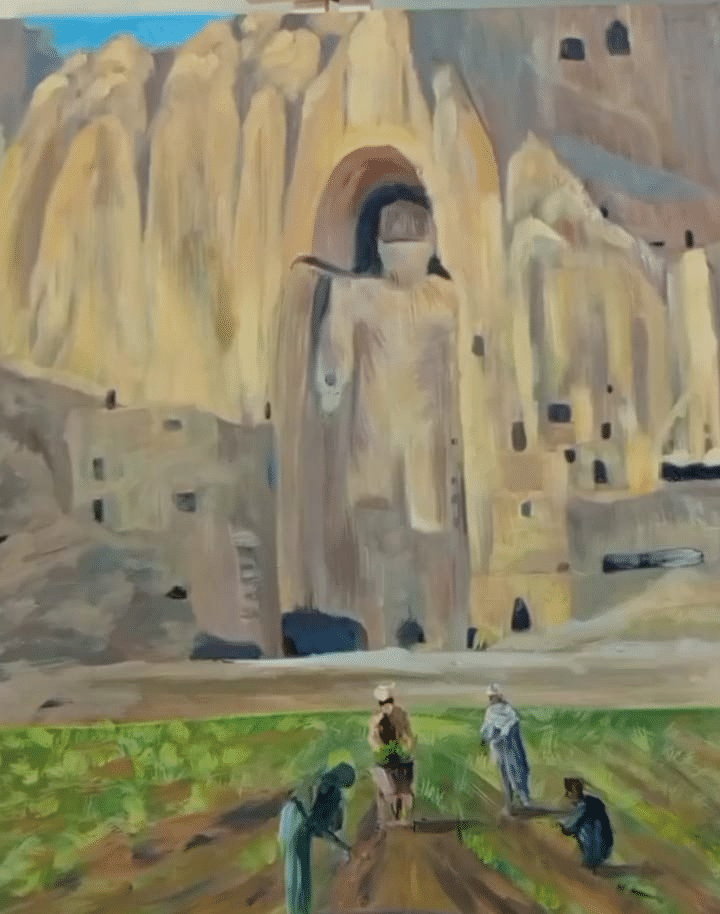
In the shadow of the destroyed Bamiyan Buddhas, the people still work the soil, guarding the ruins of a stolen heritage.
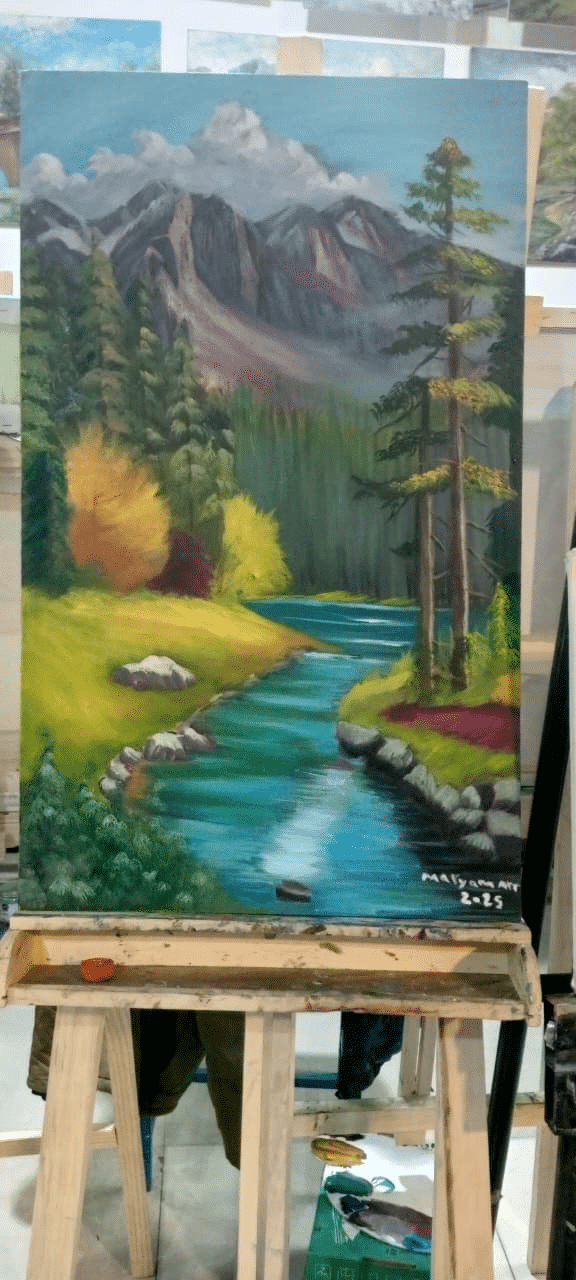
Painting the freedom she cannot live, she escapes into the wild, untouched beauty of her homeland’s mountains.
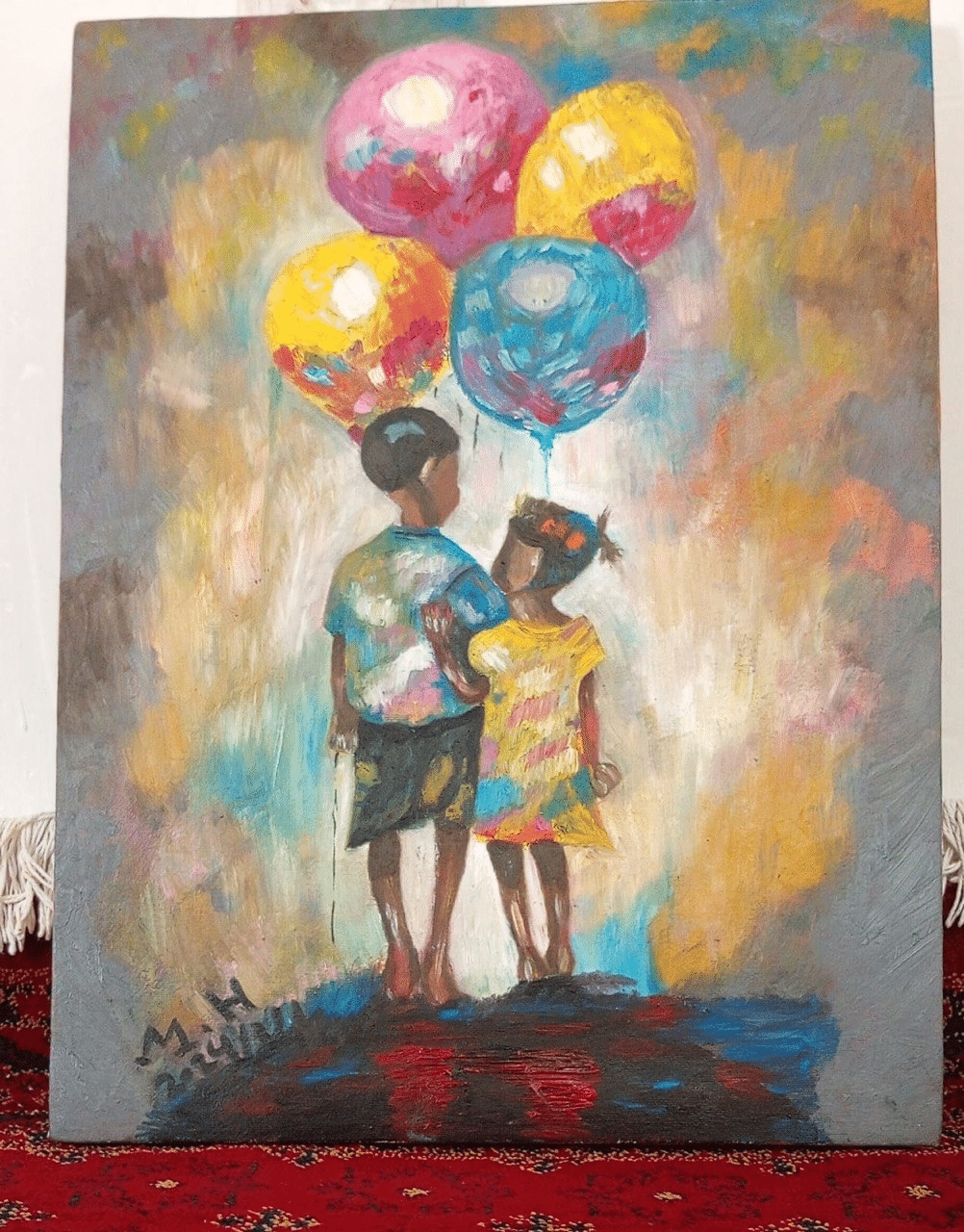
We both held the same playground, but while his path leads toward the open world, mine stops at a closed door.
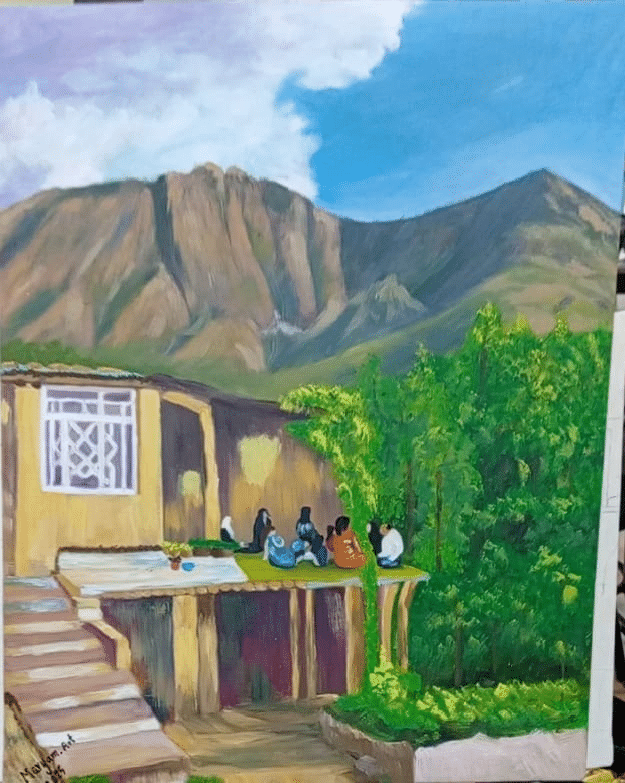
Gathered on the porch beneath ancient mountains, our family stays rooted in the enduring warmth of Afghan traditions that no law can ever erase.
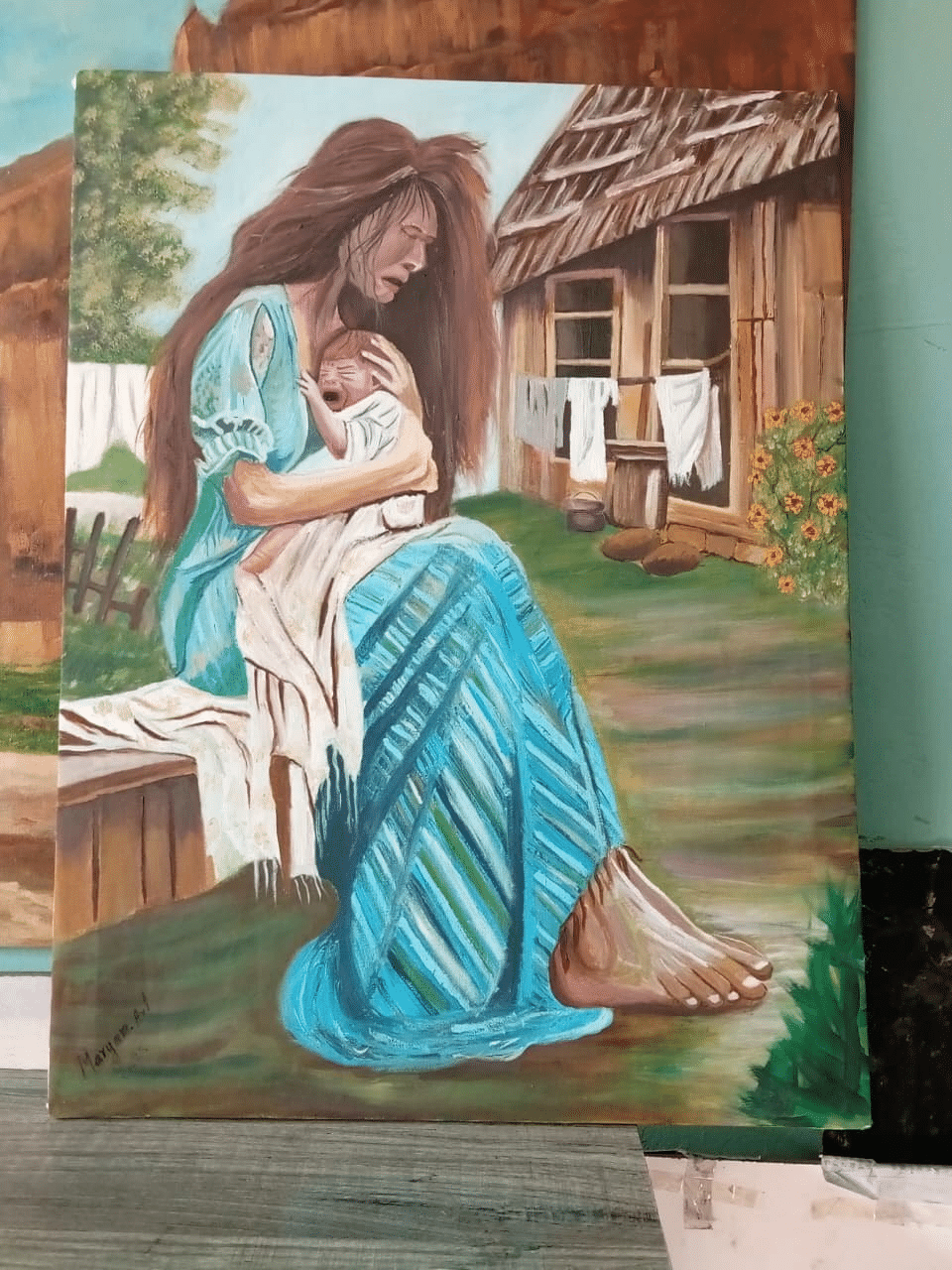
Holding her crying child against an empty horizon, an Afghan girl learns too young that motherhood in the ruins means sheltering tomorrow with a broken heart.
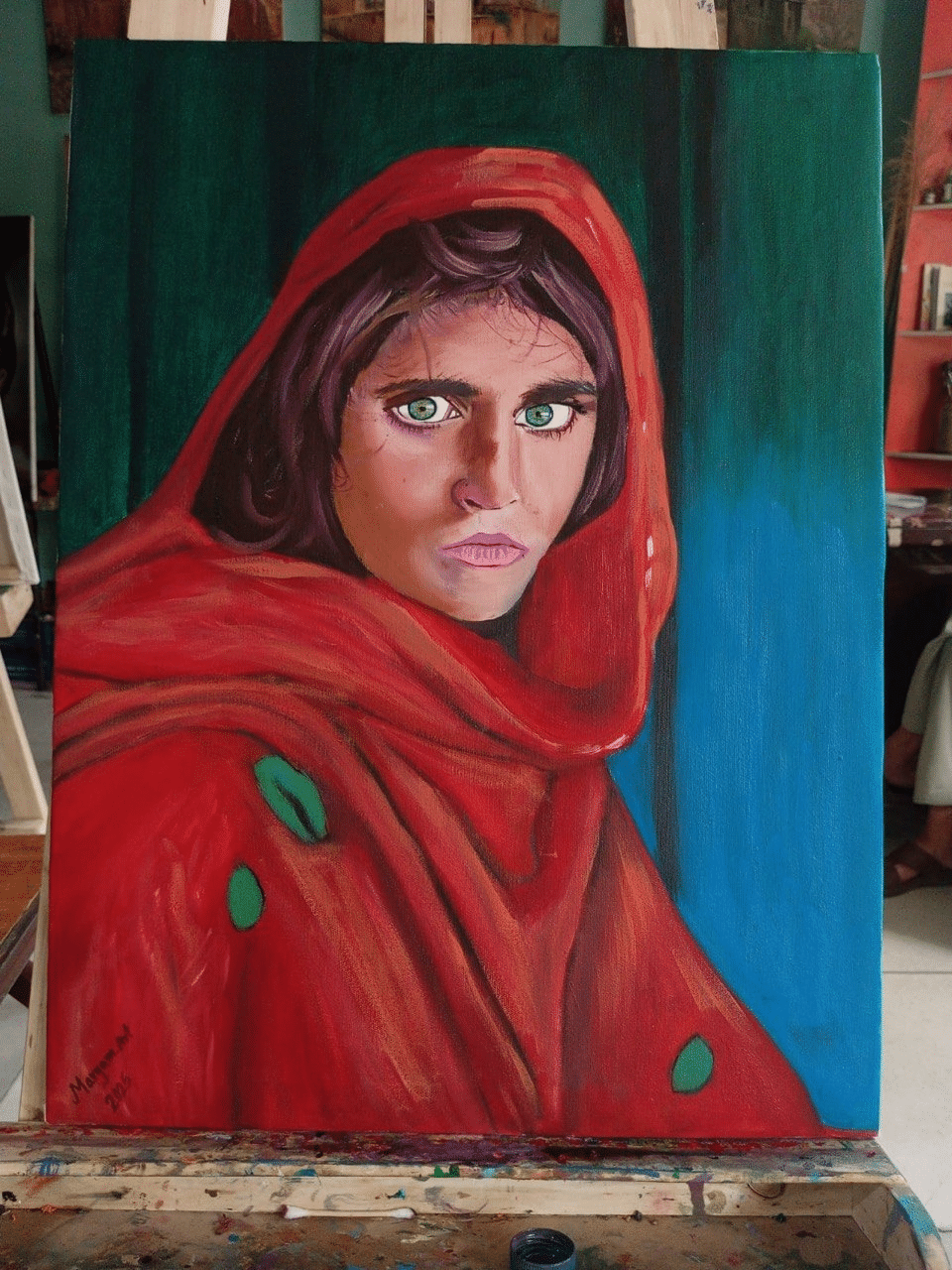
Her famous green eyes told the world about the unseen beauty of a country, yet beneath that crimson veil, they burned with a quiet defiance that no war could ever extinguish.
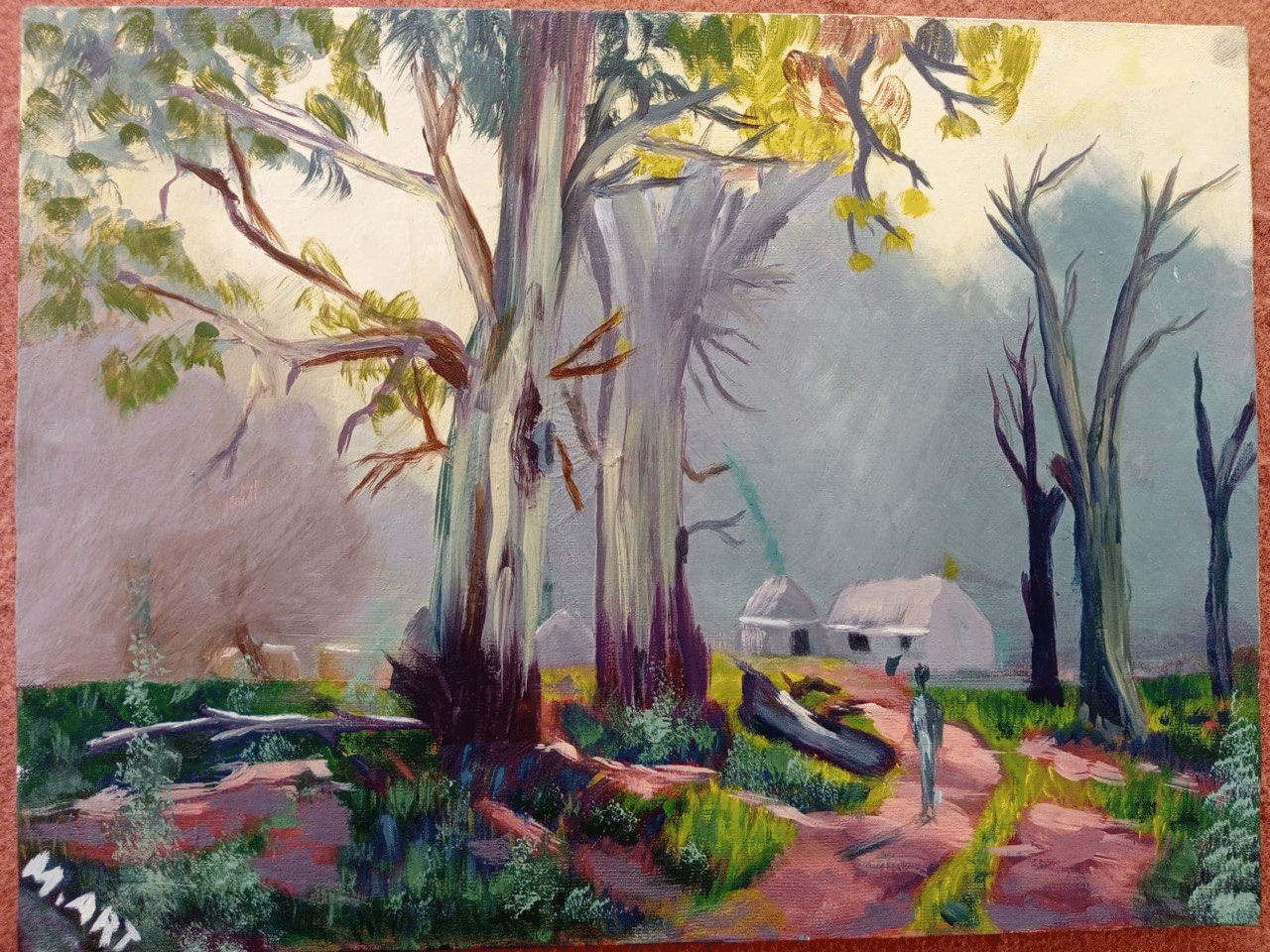
An Afghan child, trapped between the wreckage of today and the unbroken promise of tomorrow, walks a lonely path where carrying nothing means losing everything.
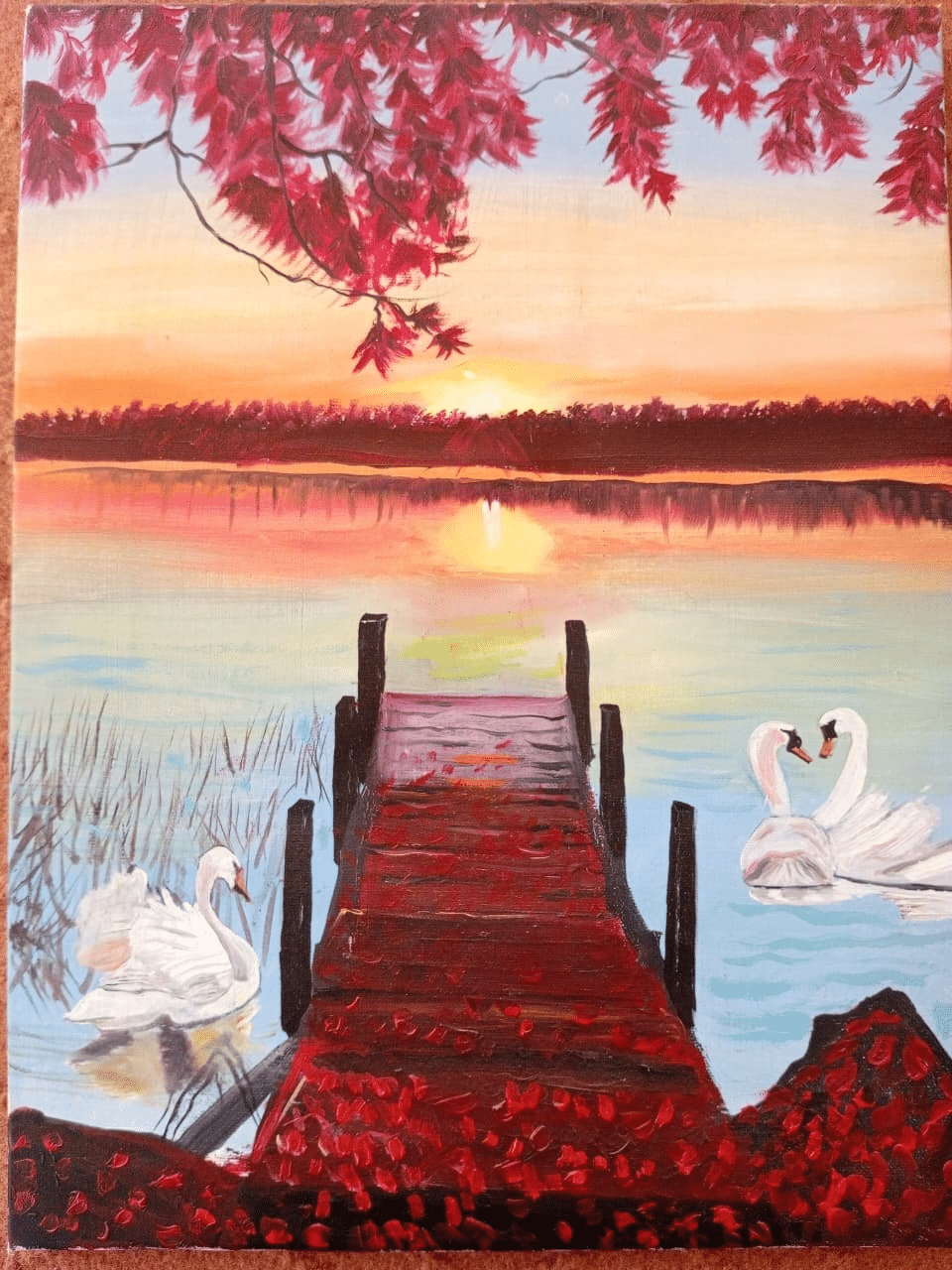
The “happy ending” phenomenon is a cruel delusion for an Afghan girl, which takes whatever is left in her soul.
Help art therapy grow
If you wish to help art therapy reach more Afghan women, please note ‘art therapy’ on your donation.